
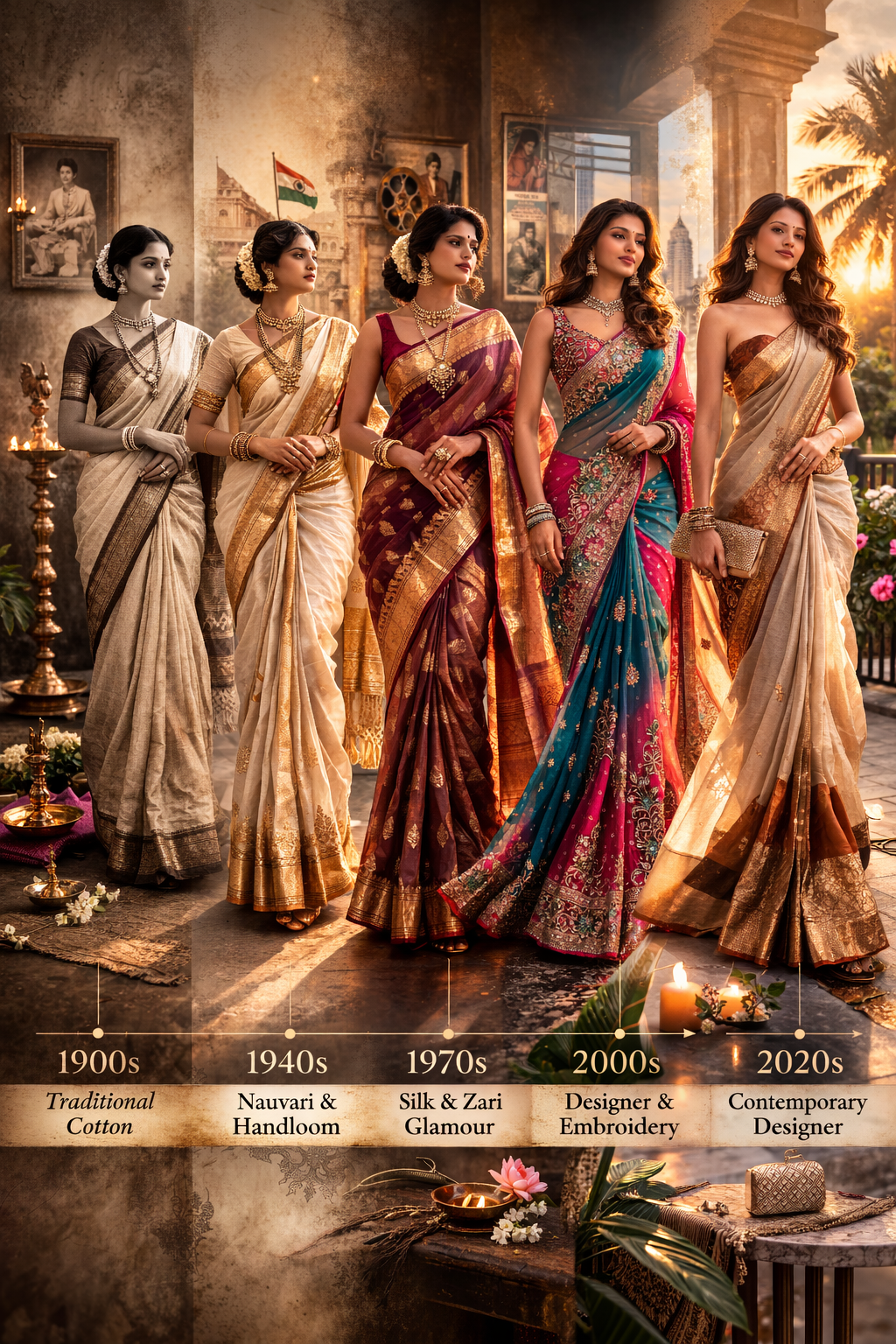
As one of the oldest known garments in the world, the saree offers a fascinating insight into the evolution of fashion and the changing roles of women in Indian society. Its journey through time mirrors cultural, social, and artistic transformations across generations.
The history of the saree dates back over 5,000 years to the Indus Valley Civilization, where women were depicted wearing draped cloths. Ancient scriptures such as the Rigveda reference women’s attire as “nāga” or “patravali,” indicating fluid draping styles that allowed freedom of movement and comfort.
These early forms were simple yet functional, often secured with a knot or tie. By the Mauryan and Gupta periods, the saree evolved into a more structured garment, crafted from cotton or silk and enhanced by the growing skill of Indian weavers.
During the medieval era, sarees became increasingly region-specific. Each part of India developed distinctive weaving techniques, motifs, and materials, laying the foundation for the diverse saree traditions we recognize today.
Over centuries, the saree transformed into a powerful cultural symbol. During the Mughal era, luxurious fabrics such as silk gained prominence, accompanied by intricate embroidery techniques like zari and brocade. These influences introduced richer textures and ornate designs.
The Mughal period also popularized styles where the saree fabric was stitched into lehenga-like forms, with elaborately draped pallus that enhanced elegance and grandeur. Sarees became markers of status, tradition, and ceremonial significance.
In southern India, regional styles flourished. Kanjivaram silk sarees became renowned for their vibrant colors and bold borders, while the Banarasi saree from Varanasi emerged as a symbol of luxury, featuring intricate gold work worn during weddings and festivals.
During the colonial period, Western fashion influenced Indian attire, yet the saree retained its cultural importance. Following India’s independence in 1947, the saree experienced a revival as a symbol of national identity and cultural pride.
In contemporary times, the saree continues to adapt. Innovations such as pre-pleated sarees and saree gowns make it more accessible to modern lifestyles, while traditional draping styles remain deeply cherished.
Today, the saree stands as a symbol of empowerment and timeless elegance. Worn at weddings, festivals, formal events, and even on global fashion platforms, it blends tradition with modernity — proving that its role in women’s lives remains as relevant as ever.